Winters in Springfield, MO can catch your plumbing off guard, since a quick cold snap can freeze pipes near exterior walls, crawl spaces, or outdoor spigots in just a few hours, even without a big storm. At Reed’s Plumbing, Excavating, Septic, Heating & Air, we help Springfield homeowners spot those risk zones early and take practical steps to protect their pipes before a freeze turns into a burst.
Know Which Pipes Freeze First in a Typical Home
Frozen pipes rarely start in the middle of your house. They start where cold air reaches the line faster than your indoor heat can buffer it. Think of supply lines that run through a crawl space, a basement corner, a garage wall, or a back section of an attic. A short stretch of exposed pipe near a rim joist can freeze sooner than a longer pipe buried inside a warm wall.
You also see trouble where water sits close to the outdoors. Hose bib lines, irrigation shutoffs, and laundry hookups on an exterior wall can cool down fast. A kitchen sink on an outside wall can freeze even when the room feels fine, since the cabinet space behind the door can trap colder air. A guest bathroom you barely use can sneak up on you, too. If water does not move through that line much, it loses heat and stays cold longer during a cold snap.
Stop Cold Air From Camping Out Around Plumbing
Cold air causes more frozen pipe problems than cold air temperature alone. Small openings can funnel outdoor air into the exact spaces where pipes sit. A gap where the line comes through the wall behind a sink, a loose crawl space access door, or a missing cover on a vent can turn one corner into a mini wind tunnel.
Cabinets are a common example. The room can feel comfortable while the cabinet interior stays much colder since the back panel often touches an exterior wall cavity. If you have a sink that sits on an outside wall, and you notice the cabinet feels chilly at night, that is a real warning sign. The same scenario shows up in garages, where the whole space swings colder than the house. Water lines routed along the garage ceiling or wall cool down fast, especially near the door.
Look closely at places where different materials meet, like the rim area where the floor framing meets the foundation, or the wall penetration where a hose bib pipe exits to the outside. Cold air often sneaks in around vent pipes, cable lines, and dryer vent sleeves, since those holes rarely get sealed tightly after installation. On windy nights, those tiny gaps can turn into a steady stream of cold air that chills a pipe long before the room itself feels cold.
Keep Indoor Heating Stable Where Pipes Need It
When a cold snap hits, your heating strategy affects plumbing even if you are focused on comfort. Pipes do better when the house stays within a steady, livable range, especially in rooms that contain plumbing on outside walls. If you shut vents, close off rooms, or let one side of the home run colder, you can create a cold zone where pipes lose the indoor heat that normally protects them.
Bathrooms and kitchens on exterior walls matter most here. A powder room that stays closed can cool down enough that the toilet supply line and shutoff valve become the weakest link. A vanity cabinet can sit in a colder pocket than the room itself. Laundry rooms near a garage or back entry can do the same thing. If you have a split-level or a finished basement, check whether the lower level runs colder during cold weather. Pipes near the foundation line can cool down faster than pipes in the center of the house.
This is not about cranking the thermostat. It is about keeping heat distribution stable, so vulnerable zones do not drift into “cold closet” territory.
Recognize Early Warning Signs Before a Pipe Bursts
A pipe burst often comes after a quieter phase where the line is already freezing. You can catch that phase if you know what it looks like. The biggest clue is a faucet that runs weak, sputters, or stops on a cold morning, especially if other fixtures still work. That can mean ice is forming inside the supply line feeding that fixture. Another clue is a toilet that refills slowly or not at all, since the small supply line can freeze before larger pipes do.
Strange sounds matter, too. You might hear new creaks or ticks in a wall when hot water runs, since the plumbing is expanding and contracting against framing. You might hear a faint hiss or a change in water tone when a partially frozen pipe restricts flow. Do not ignore a damp smell in a cabinet or a new wet spot on drywall. A freeze can damage a pipe without an obvious flood right away, especially if it cracks and leaks only when pressure spikes.
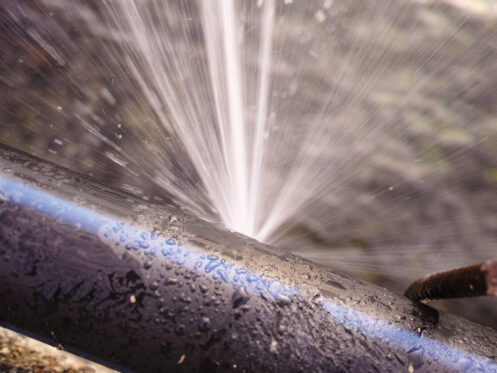
If you suspect a freeze, avoid experimenting with heat sources or forcing valves. Call a licensed plumber to assess it safely and prevent a small crack from turning into a large water loss.
Build a Prevention Plan That Fits Your Home’s Layout
Prevention works best when it matches your actual plumbing layout. Start with a simple mental map of where water lines run through unheated or drafty zones. Many houses have one or two “problem paths,” like a kitchen line that hugs an exterior wall, a laundry supply near a back entry, or a main line that travels through a crawl space. Once you know those paths, you can focus your attention where it matters and stop wasting effort on areas that stay warm.
Materials and age affect risk, too. Older shutoff valves can seep once cold weather stiffens seals. Older fittings can loosen after repeated temperature swings. A home with past remodeling might have supply lines routed in odd ways, such as through a soffit or a garage ceiling, and those routes tend to cool down quickly.
If your home has a history of winter plumbing issues, treat that history like a clue, not a coincidence. A plumber can review vulnerable runs, check shutoffs and connections, and recommend targeted upgrades that protect the lines most likely to freeze. That way, you won’t need to brace for the next cold snap every year.
Protect Your Plumbing Before the Freeze
Frozen pipes are not just a nuisance. They can lead to hidden cracks, soaked drywall, ruined flooring, and the kind of cleanup that drags on for weeks. Reed’s Plumbing, Excavating, Septic, Heating & Air can help with leak detection, pipe repair, winterization checks, water heater service, shutoff valve replacements, and emergency plumbing support when cold weather hits hard.
For help protecting your home before the next freeze in Springfield, call Reed’s Plumbing, Excavating, Septic, Heating & Air to schedule a winter plumbing visit.

 Today!